San Diego Jewish World
                         'There's a Jewish story everywhere'


 Vol. 1, No. 124

         Saturday Evening , September 1, 2007
 
Community Phone & Email Directory
Jewish World Community Calendar

AJE Makor
Calendar

UJF Community Calendar
 
Search This Site
  (click here)
Jewish Forum questions: join the discussion;
           click here
Jewish Grapevine files
Back issues by date
Back-issue headlines
PLEASE SUPPORT OUR ADVERTISERS; THEY ARE HELPING TO BRING San Diego Jewish World TO YOU:
America's Vacation Center 
●Bubbla Packaging
Chabad at University City
Congregation Beth Israel
Humanistic Jewish Congregation
I'm There For You Baby radio show
 
In the Know radio show
Israel Guide Dog Center
JCC Maccabi games  
Jewish American Chamber of Commerce 
Jewish Community Foundation
●Jewish Family Service
Museum of Man:
Journey to the copper age
Ohr Shalom Synagogue 
O
ld Town Trolley Tours of San Diego
San Diego Community Colleges
San Diego Jewish Academy
Seacrest Village Retirement Communities
Tifereth Israel Synagogue
Columnists/
   Writers

*David Amos
*Laurie Baron
*Judy Lash Balint
*Shoshana Bryen
*Cynthia Citron
*Carol Davis
*Rabbi Wayne Dosick
*Garry Fabian
*Gail Forman
*Sandy Golden
*Gerry Greber
.*Norman & Roberta Greene
*Alex Grobman,PhD
*Donald H. Harrison
*Irvin Jacobs, MD
*Natasha Josefowitz
*Bruce Kesler
*Judith Apter Klinghoffer
*Rabbi Baruch Lederman
*Dov Burt Levy
*Elizabeth Levy
*Ya'acov Liberman
*Bruce Lowitt
*Joel Moskowitz, MD
*Joe Naiman
*Sheila Orysiek

*Yoni Peres
*Fred Reiss
*Michael Rosen
*Rabbi Leonard Rosenthal
*Dan Schaffer
*Ira Sharkansky
*Dorothea Shefer-Vanson
*David Strom
*Lynne Thrope
*Eileen Wingard
*Isaac Yetiv
*Edward Zeiden
*Heather Zeiden

 
Contact us
Email: sdheritage@cox.net
PO Box 19363
San Diego, CA 92159
(619) 265-0808

San Diego Jewish World is a publication of The Harrison Enterprises of San Diego, co-owned by Donald & Nancy Harrison.


(click on headline below to jump to the story)

Israel and Middle East

IDF's Gen. Kaplinsky says Iran training Hamas fighters

IAEA says Iran expands efforts to enrich uranium


Congresswoman Susan Davis runs Iraq survey on her House website


Shoshana Bryen: ‘Lost’ better describes Palestine than Iraq


Ira Sharkansky: Connie Rice's 'Hail Mary' pass


United States of America

Bernanke: Demand for housing could continue to weaken

Rothman tells pro Labor record of
the current Congress, promises more


Sanders blasts Bush's economic policies at pro- labor symposium

Dov Burt Levy: Grandparents Day, best of all  secular holidays, comes September 9th


Forum

Activist dentist wants beer and other alcohol removed from SDSU

Jewish Humor

Wanting to become a rabbi


Features


The Jewish grapevine


Greater San Diego County

Judaism for all the senses at Tifereth


IDF's Gen. Kaplinsky says Iran training Hamas fighters

NEW YORK (Press Release)—
The Israeli army’s deputy chief of staff said that the terrorist group Hamas has sent hundreds of its fighters abroad for military training, most of them to Iran, The New York Times reported.

Maj. Gen. Moshe Kaplinsky also said Hamas was constructing fortifications in Gaza and smuggling advanced weaponry via tunnels under the Egyptian border.

Kaplinsky added that the longer Hamas continues its military buildup, the greater the challenge of confronting them will be.

Discussing the possibility of a major IDF incursion into Gaza, he warned that “given the way Hamas fights, we’ll hurt a lot of civilians, and we don’t want to do it.”

The preceding story was provided by the American Israel Public Affairs Committee

                    ____________


You can see more cute dogs and more information about how you can help the blind by clicking on this advertisement


 IAEA says Iran expanding its efforts
 to enrich uranium to weapons grade

WASHINGTON, D.C. (Press Release)—The International Atomic Energy Agency (IAEA) on Thursday said that Iran is expanding its efforts to enrich uranium - a key step toward producing nuclear weapons, The New York Times reported. The IAEA report comes as Tehran has promised to answer questions about an array of suspicious nuclear activities in the past.

“There is no partial credit here,” said State Department spokesman Tom Casey. “Iran has refused to comply with its international obligations, and as a result of that the international community is going to continue to ratchet up the pressure.” Gregory Schulte, U.S. Ambassador to the IAEA, added: “For the most part, Iran has only made promises.” Tehran has rebuffed multiple U.N. Security Council resolutions demanding that it end its illicit nuclear program and faces more stringent sanctions as a result of its non-compliance.

The preceding story was provided by the American Israel Public Affairs Committee


Israel and Middle East

                   
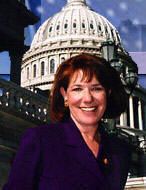
Susan Davis         Mahmoud Abbas       Condoleezza Rice
 

Congresswoman Susan Davis runs
Iraq survey on her House website

WASHINGTON (Press Release)—U.S. Rep. Susan Davis (Democrat, California) has a four-question survey on her website concerning continued U.S. participation in the Iraq War.

Here are the questions:
 

1. Should the United States set a specific timeline to bring our troops home?

2. Should the United States keep its military forces in Iraq until civil order is restored there, even if that means continued U.S. military casualties and billions of U.S. taxpayer dollars per month?

3. Should the United States withdraw its military forces from Iraq, even if that means civil order is not restored and continuing instability in the region might increase?

4. Do you believe that Congress should vote to deauthorize the Iraq war?

Underscored is the link to the website page bearing the automated survey by the congresswoman who chairs the House Armed Services Personnel subcommittee and represents a San Diego district:

The preceding story was based on information provided by the office of Congresswoman Susan Davis


Commmentary

‘Lost’ better describes Palestine than Iraq

By Shoshana Bryen

WASHINGTON, DC. (Press Release)—If Iraq can be called "not lost," Palestine - the national entity that was to normalize Palestinian identity and provide a peaceful neighbor for Israel - is indeed lost, if it ever existed.

If radical parties in Iraq are still trying to provoke a civil war, the Palestinians had a civil war in Gaza and are preparing for another in the West Bank. Fatah lost the first and doesn't appear to have much going in the second.

If the Iraqi government is struggling to meet American political guidelines, the Palestinian Authority is bifurcated between transnational jihadist Hamas in Gaza taking support from both Iran and Saudi Arabia, and weak, corrupt Fatah with only limited authority in the West Bank.

If the Iraqi government has trouble providing security and services after less than two years, the Palestinians still live primarily on charity 14 years after Oslo.

If the Iraqi military remains dependent on American soldiers for success, the Fatah military failed to meet every American organizational and command requirement for continued assistance, utterly failed on the battlefield and ran away ignominiously leaving equipment and wounded comrades behind.

So where does the U.S. propose to increase its investment? Palestine.

Lt. Gen. Keith Dayton, America's security coordinator for the territories wants five new Palestinian battalions across the West Bank to support Abu Mazen, according to the Israeli daily Haaretz. They will need new equipment and more training.  

A report by the Washington Institute for Near East Policy says Israel has determined that Hamas now has the U.S.-origin eavesdropping equipment and other signals intelligence technology provided in a previous effort to bolster Abu Mazen. It can be used against Fatah, of course, but will also hinder Israeli efforts to monitor Hamas in Gaza. "Hamas acquired (from Fatah arsenals) stockpiles of American-made small arms and ammunition as well as a wide range of military equipment and vehicles...thousands of M-16 and AK-47 assault rifles... rocket-propelled grenades, some equipped with dual warheads and designed to penetrate armor." This is in addition to Hamas's own extensive arsenal, growing steadily through imports via the tunnel smuggling network and indigenous production.

Hamas threatens Fatah for control of the West Bank. Abu Mazen is already talking about Palestinian "reunification" - accepting defeat and a lesser position for Fatah under Hamas rule. The U.S. should think long and hard before making additional investments of military training, technology and arms in the rump army of Abu Mazen. If he fights, he will lose and if he concedes, we will lose and lose whatever new equipment and/or capabilities we try to give them.

Either way, unlike Iraq, Palestine is lost.

Bryen is director of special projects for the Jewish Institute for National Security Affairs


Letter from Jerusalem
                                By Ira Sharkansky

Connie Rice's 'Hail Mary' pass

JERUSALEM—A lengthy review of Condoleezza Rice's government career and near-future prospects in the New York Times will add to Israeli paranoia. It describes her as trying to salvage a damaged reputation (principally on account of Iraq) by pushing Israeli and Palestinian leaders together in the hope that something positive will emerge.

What it describes as a "possible source of redemption" for Ms Rice could be costly for us.

It is hard to be encouraged by what some distinguished commentators, quoted in the article, say about her efforts.

Her strategy is to just keep knocking on this door, without a strategy, making it up as she goes along in an effort to put something together . . . This determination is now tied to not just the perception of the national interest, but her own personal interest too.

it is possible, though unlikely, that Ms. Rice could change the historical record in her remaining time in office. “If she pulls a rabbit out of her hat on the Israeli-Palestinian question, and some kind of political compromise in Iraq, it could partially salvage her legacy . . . ”

One of Ms Rice's partners in her effort is our prime minister. And he, too, seems inclined to salvage something from a damaged reputation. Hanging over him are an official recommendation to open police investigations about one charge of corruption, several other charges working their way through the bureaucracies, and the prospects of a damning report by an official commission investigating last years war in Lebanon. A variety of polls this year have found his approval ratings in the range of 3 to 23 percent.

A metaphor for both Rice and Olmert comes from American football. Both are throwing a "Hail Mary" pass. It is late in the game; they are behind; and a long pass might salvage things.

My recollection from watching American football is that long passes usually go astray.

In this case there are substantial reasons to expect little of substance from the meetings between Olmert and the Palestinian leader Mahmoud Abbas, and the showy international meeting scheduled for November by Bush and Rice in Washington. Moderate Israeli commentators ridicule the prospects. They cite the weakness of Abbas among Palestinians, the power of Hamas in Gaza, its steadfast opposition to Israel's existence, and the refusal of Abbas to abandon the great deal breaker of a right of return for refugees from 1948 and 1967 and maybe their descendants.

Skeptics also focus on Olmert's refusal to share his negotiating positions with his colleagues in the governing coalition, and his denial of the positions that find their way to the media. When one or another idea said to be in the Olmert portfolio does surface, members of his own party, other members of his coalition, and numerous opposition Members of Knesset are shrill in their criticism.

The alleged details include the assignment of virtually all the West Bank to a Palestinian state, provision of land currently in Israel to make up for parts of the West Bank Israel will keep, the division of Jerusalem, the location of a Palestinian capitol somewhere in Jerusalem, the working out of authority for the Temple Mount/Nobel Sanctuary, and silence on the right of return for refugees.

Polls have indicated that there may be a popular majority among Israeli citizens in favor of what Olmert may be offering. However, this is not a popular democracy governed by referenda. The formal authority rests initially with the governing coalition and--assuming government approval--the Knesset. The current assessment is that Olmert is short of majorities in both forums.

The football is in the air. We do not know where it will land by November. We have not yet concluded the worst and left the stadium, but the Rice-Olmert team may have to chock up a loss on this game.

Sharkansky is a professor emeritus at Hebrew University 
 

United States of America


 Bernanke                  Rothman                   Sanders

Bernanke: Demand for housing could continue to weaken

JACKSON HOLE, Wyoming (Press Release)Federal Reserve Chairman Ben Bernanke spoke on housing finance and the economy at a symposium here arranged by the Federal Reserve Bank of Kansas City.  An excerpted transcript of his remarks follows:

... Recently, the subject of housing finance has preoccupied financial-market participants and observers in the United States and around the world. The financial turbulence we have seen had its immediate origins in the problems in the subprime mortgage market, but the effects have been felt in the broader mortgage market and in financial markets more generally, with potential consequences for the performance of the overall economy.

In my remarks this morning, I will begin with some observations about recent market developments and their economic implications. I will then try to place recent events in a broader historical context by discussing the evolution of housing markets and housing finance in the United States. In particular, I will argue that, over the years, institutional changes in U.S. housing and mortgage markets have significantly influenced both the transmission of monetary policy and the economy's cyclical dynamics. As our system of housing finance continues to evolve, understanding these linkages not only provides useful insights into the past but also holds the promise of helping us better cope with the implications of future developments.

Recent Developments in Financial Markets and the Economy
I will begin my review of recent developments by discussing the housing situation. As you know, the downturn in the housing market, which began in the summer of 2005, has been sharp. Sales of new and existing homes have declined significantly from their mid-2005 peaks and have remained slow in recent months. As demand has weakened, house prices have decelerated or even declined by some measures, and homebuilders have scaled back their construction of new homes. The cutback in residential construction has directly reduced the annual rate of U.S. economic growth about 3/4 percentage point on average over the past year and a half. Despite the slowdown in construction, the stock of unsold new homes remains quite elevated relative to sales, suggesting that further declines in homebuilding are likely.

The outlook for home sales and construction will also depend on unfolding developments in mortgage markets. A substantial increase in lending to nonprime borrowers contributed to the bulge in residential investment in 2004 and 2005, and the tightening of credit conditions for these borrowers likely accounts for some of the continued softening in demand we have seen this year. As I will discuss, recent market developments have resulted in additional tightening of rates and terms for nonprime borrowers as well as for potential borrowers through "jumbo" mortgages. Obviously, if current conditions persist in mortgage markets, the demand for homes could weaken further, with possible implications for the broader economy. We are following these developments closely.  (Jump to continuation)


Rothman tells pro-Labor record of
the current Congress, promises more

WASHINGTON, D.C. (Press Release)—U.S. Rep.
Steven Rothman (Democrat, New Jersey) issued the following report  in anticipation of Labor Day on the work of Congress:

"This Labor Day, I am happy to report that America is headed in a new, better direction. Between Labor Day 2006 and Labor Day 2007, Americans voted to put individuals in charge of Congress who take seriously the concerns of working Americans. As a result, in the last eight months, the House of Representatives has passed legislation to allow free choice for people to bargain for better wages, benefits, and working conditions; to provide collective bargaining rights for public safety officers in all 50 states; to allow shareholders to vote on excessive corporate executive pay; and to restore $1.4 billion that President Bush cut from vital employment and training programs, including the dislocated worker program and Job Corps.

"Both the House and Senate have passed the largest college aid expansion since the GI Bill in 1944; a military pay raise; and an historic energy independence bill that will create millions of new American jobs in construction, efficient vehicle manufacturing, bio-fuels development, and renewable electric power.

"And Congress won enactment of the first federal minimum wage increase in 10 years; the first Pell Grant increase since 2003; and implementation of the 9/11 Commission recommendations to improve our homeland security and give first responders the tools they need to keep Americans safe.

"I am the first to admit that there's a lot of work yet to be done. But the job of restoring and protecting the American Dream is well under way. The President and his Republican allies in the Senate cannot stop all progress - especially when the vast majority of Americans demand change. After the last seven years of the Bush Administration, more and more people realize that a pro-labor agenda is pro-American. By Labor Day 2008, I expect there will be more progress to report."

(Return to top)


Click the ad above to go to the "I'm there for you baby" website


Sanders blasts Bush's economic policies at pro- labor symposium

BURLINGTON, Vermont  (Press Release)—As Americans observe Labor Day, Senator Bernie Sanders called on Congress to adopt smarter trade policies, enact health care reform, and expand education opportunities to help working people.

The senator also challenged President Bush’s assessment of the economy. “President Bush repeatedly says the economy is ‘strong and getting stronger,’ ‘thriving,’ ‘robust,’ ‘solid,’ ‘booming,’ ‘healthy,’ ‘powerful,’ ‘fantastic,’ ‘exciting,’ ‘amazing’ and ‘the envy of the world,’ ” Sanders said, “and, to a certain extent, he has a point.  The richest people in our country are doing phenomenally well. But what the president has got to understand is that not everyone in America is a millionaire or billionaire, and that millions of working Americans are struggling hard to keep their heads above water.”

The (Independent) senator was joined at a discussion about economic realities confronting Americans and Vermonters by James Haslam, director of the Vermont Workers’ Center, and University of Vermont Associate Dean Stephanie Seguino.

“On this Labor Day weekend, most American workers have not shared in the growth and prosperity they have been helping to create. For these families, there is no possibility for money left over at the end of the month. For them, there is a lot of month left at the end of the paycheck,” Professor Seguino said. 

Added James Haslam of the Vermont Workers’ Center: “Labor Day has lost mush of its original meaning.  A day once set aside to pay tribute to the achievements of working people now has more to do with shopping at big-box stores than with honoring the labor movement – the folks that brought you the weekend.” 

The preceding story was provided by the office of Senator Sanders


  Dov Burt Levy    
Grandparents Day, best of all  secular holidays, comes September 9th


SALEM, Massachusetts—I offer advance notice for September 9, the first Sunday after Labor Day, which has been, since 1978, Grandparents Day, my favorite secular holiday.

I have watched grandparents play with their grandchildren in parks, on beaches, at zoos, all over the world. I have seen workaholic men and women throw off their working shackles and spend hours playing blocks or other games with a small grandchild.

I remember my friend, Marty, in Jerusalem, in pain from various ailments, a crusty and cynical guy during his last years, as he fed his two-year-old grandson: his face shone, his eyes gleamed, his mouth puckered and he smiled. I am talking about Marty, not the boy, who, in turn ate with joy and smiles.

Up until age 6 or so, a grandchild will accept all the attention and affection we have to give. They take your hand or grasp your finger and go anywhere, for as long as you wish, to a playground, beach, restaurant, a museum or just a long walk.

Novelists tell this love story better than journalists. Bernard Kops' novel Settle Down Simon Katz has Katz as a despicable guy, never worked an honest day, scams his son, harasses his daughter, kicks his cat and doesn't pay his bills. But about his granddaughter: "BeingSharon's grandfather was preferable to any other occupation in the world. As he imagined the face of Sharon, he could not help himself kissing the photograph of Betty [his deceased wife]…the spitting image of the child; the same smiling face, the same eyes… 'Sharon', he spoke
her name aloud… his most beautiful and only grandchild."

Until about age six, grandchildren accept our attention and affection, about as much as we have to give. But when the realization comes that they can have fun and playdates with kids their own age, grandparents can be relegated to a minor role. For some grandparents this change can be devastating, causing almost a pathetic begging for the child's time.

Listen to teenager Claire in Joyce Carol Oates short story, "Why Don't You Come Live With Me, It's Time."

"'Come by any time dear, no need to call first,' my grandmother said often… I would bicycle across the river to her house once or twice a week, or drop in after school… but I never stayed for long, her happiness in my presence made me uneasy."

The good news is that after around age 20, things can change
dramatically. I met Bernice, the local Jewish Community Center receptionist, four years ago. We chatted. I asked if she ever visited Israel.

"No," she replied, "It seems like it is always too dangerous." A
pleasant woman doing her job well.

Fast-forward four years. Her grandson, Eli, now 22 years
old, completed a long course in Jerusalem and is now studying and working in the Jewish community in Vilnius, Lithuania. His sister, Dara, 17, just finished a two-week conclave at an international Jewish camp in Hungary.

Today, Bernice literally beams as she works. I ask about her
grandchildren and she lights up so brightly that I am thinking the JCC could save energy by shutting off its fluorescent lighting. She hands me a copy of Eli's latest e-mail describing an encounter helping a frail elderly Jewish man walk home.

"It will bring tears to your eyes," she says. And it does.

"What do you think about visiting Israel now that Eli has been there and loves it?" I ask.

"I am ready to go."

Too bad that Grandparents Day never really caught on like Mothers Day or Fathers Day. Still, a Google search for "Grandparents Day" on your computer will bring thousands of citations, most showing efforts of local school children to visit and give joy and presents to the elderly living in nursing homes. Many of our own local schools do similar projects during the year.

What a great day for grandparents and grandkids (the parents can even come along) to do something special, write something, look at pictures together, video tape a conversation between grandparents and the kids, to get on the record the life and times of both. Perhaps you will do something, even just think about your grandparents or your grandkids, write it down, send it to me, and we will make another column to share with readers.

Dov Burt Levy is a regular Jewish Journal Boston North columnist. He may be
contacted at dblevy@columnist.com.


Forum


Activist dentist wants beer and other alcohol removed from SDSU


Editor,
San Diego Jewish World

San Diego State University took a semi giant step forward in its realization that promoting a beer company’s advertising is not in the best interest of its youthful impressionistic student body. For years when President Weber spoke at the freshman new student and family convocation program at the Cox Arena, his message and image were projected on scoreboards flanked by “Miller Lite and Miller Time” signs

 In addition Miller advertising was on many of the ad panels surrounding the top walkway so that no one could enter or leave the Cox without finding out that beer was cool, accepted by the school and if and when you want a tall cool one Miller was the Brew for you.

I did a walk through the auditorium on the morning of the most recent  convocation and I was overjoyed to see that all and I mean all Miller signs including the scoreboards were covered over with black fabric.

I wanted to shout hurray, but saddened when I thought about the two SDSU students who died from alcohol related activates, one of these students passed away less than four months ago. (Editor’s note: One of the students was a member of our local Jewish community)

I wished that Dr. Weber would refer to these two students and caution the new freshman class about being super alert to reject the temptation of alcohol and drugs and to immediately report to school authorities if they become aware of  illegal serving of alcohol or other controlled substances in any venue where students are invited or live.

To provide the students with the message that you don’t need beer to be “cool” all beer advertising should be eliminated from all recreational sites on the campus and Louis’ Bar should have its lease cancelled. This bar is at the entrance of the campus and portrays a message that beer is fun.

The two alcohol deaths and other not publicized but related problems are two too many. Of course eliminating alcohol’s signage and the bar on campus is no guarantee that students won’t drink and use drugs but at least the school can hold up its head knowing that it didn’t contribute to the promotion of alcohol use.

We need to work together to help to free SDSU from the grip of alcohol influence on campus.


Norman Mann, D.D.S.
San Diego


.

Jewish Humor

Wanting to become a Rabbi

A boy decided that he wanted to become a rabbi when he grew up, so his father suggested that he go to speak to their shul rabbi to find out what the job entailed.

"Ask me any question about the rabbinate and I'll give you the answer," declared the rabbi when the boy went to meet him.

"Well, besides giving a sermon for about fifteen minutes on a Shabbat morning, what else do you do all week?" the boy asked.

"You don't want to become a rabbi," thundered the rabbi. "With questions like that you want to become the shul president!"
          
—Thanks to Larry Gorfine for forwarding this


Features

The Jewish Grapevine                                                  
                 

CYBER-REFERRALS—San Diego Jewish World appreciates and thanks those individuals and organizations which recommend or post stories of interest to the worldwide Jewish community:

San Diego Union-Tribune: An Associated Press story about Holocaust survivors who have become philanthropists and now are helping to reestablish life in their native Poland. Here is the link.


JEWISH POLITICAL FIGURES

U.S. Rep.
Rahm Emanuel (Democrat, Illinois) and U.S. Sen. Richard J. Durbin (Democrat, Illinois) have appealed to the federal Environmental Protection Agency to overrule a decision by the Department of Environmental Management in the neighboring state of Indiana to permit British Petroleum to emit more than double the amount of particulate matter into the air at its Whiting, Indiana, refinery.  "
Particulate matter can cause serious respiratory illnesses and aggravate conditions such as asthma," the two legislators wrote.  "The air permit issued by IDEM for BP's Whiting facility also would allow the refinery to increase the amount of carbon monoxide it discharges into the atmosphere."


PEERING OVER THE DIVIDEThe Middle East Cultural and Information Center is hosting a $15-per-person dinner at the Normal Heights Community Center, Saturday, Sept. 22, at which two Arab speakers and an Iranian music group (Darvak Music Ensemble) will be featured. The speakers are Khalil Bendib, an editorial cartoonist whose book is entitled Mission Accomplished, and Michel Shehadeh, a Palestinian activist against whom a federal deportation case was dismissed. This event is sponsored by Alternate Focus, which produces television programming on the Dish Network.  More information is available via the organization's website, www.alternatefocus.org


Greater San Diego County


____________________
The Jewish Citizen
            
 by Donald H. Harrison
 

Judaism for all the senses at Tifereth

SAN DIEGO—Teachers generally understand that different students have different learning styles.  Some are auditory learners: you tell them something and they will remember it.  Others are visual learners: it’s best not only to tell them something but to write down a key word on a blackboard or show them a picture.  When trying to recall the information, they first will recall the image that they saw.  Yet another group, perhaps the toughest to teach in the school setting, are those that learn through touch.  If they can handle an object, either in the process of a game, or through manual inspection, it will help them understand its use and context better.

Tifereth Israel Synagogue in this month of the Jewish High Holidays has announced a schedule of events that similarly will appeal to different learning styles. 


Three learning styles will be utilized, for example, at 9 a.m. Wednesday, Sept. 5, and again at 6 p.m., Tuesday, Sept. 18, when Eden Nullar and Laura Birman demonstrate the art of scrapbooking.  Participants at their session will hear their explanations, see the photographs and other memorabilia that can be placed in original ways into the scrapbooks, and they will touch touch scissors, pens and other tools of the scrapbooker’s craft.

On September 8, the sense of taste, which is so influenced by that of smell, will come to the fore at 6:30 p.m. when children below the age of 13 and their parents will partake of a light meal, known as a seudah.  Then, “Bob the Beekeeper” from a local apiary will invite both the children and the adults to sample different varieties of honey.  Rabbi Leonard Rosenthal will assist the auditory learners with a lecture on what makes honey kosher, while those who learn through touch—the kinesthetic learners—will have the opportunity to make from beeswax a holiday item for Rosh Hashanah.

Later on that evening of Selichot, there will be a showing of the movie Tijuana Jews, with a panel discussion about the film featuring members of the Mexican Jewish community sharing thoughts and answering questions  At 11:30 p.m., there will be a traditional Selichot service—in which the Torah mantles are changed to make the Sacred Scrolls ready for the High Holidays.

A Tashlich service—a casual part of the day-long Rosh Hashanah liturgy—will be conducted at 5 p.m. Thursday, September 13, off the main parking lot of Lake Murray.  This short service involves symbolically casting one’s sins onto the waters.  Much to the delight of Lake Murray’s ducks, geese, and other water fowl, sins are symbolically represented by pieces of bread.

More kinesthetic learning will occur on the evenings of September 16, 23, and 30 when Paul Kalmar teachers Israeli dance at a fee of $3 for Tifereth Israel members and $5 for visitors.

On September 28, following 6:15 p.m. Kabbalat Shabbat and Shemeni Atzeret services, the sense of taste will be engaged at a Shabbat dinner at the synagogue.  The kosher dinner will cost $18 for adults and children 6 years and older.  Those kids between 3 and 5 will have their appetites accommodated for $6 each, while children under 3 get to munch all they want for free.

It will be story time from 11:30 a.m. to 12:30 p.m. on Sunday, September 30, with Abraham Ratner Torah School Director Ira Sherbak planning something special for the holiday of Sukkot.

At 5:30 p.m., members of the congregation who reserve tickets ($10 for adults, $7 for children between the ages of 6 and 12, and $3 for those between the ages of 3 and 5) will again get to engage all their senses, with a dinner in the synagogue’s Sukkah.

There will be much to see, as the Sukkah is decorated with arts and crafts created by the children of the Torah and Pre-Schools.  There will be much to smell and taste because pasta, salad and dessert are promised.  There will be much to hear because there will be traditional blessings, and maybe even a story or two. 

And there will be much to touch, especially because this holiday features waving three species (date palm, willow, and myrtle) in the cardinal directions of the compass, to acknowledge God’s mastery over the entire universe, while the waver also holds a large citron, a fruit known in Hebrew as an etrog.

Clearly, September is a month for all the senses.

 
{Marc Kligman, who combines being a sports agent with his life as an observant Jew, invites you to listen. Click on the ad above for more information}


Story continuations

Bernanke...
(Continued from above)

As house prices have softened, and as interest rates have risen from the low levels of a couple of years ago, we have seen a marked deterioration in the performance of nonprime mortgages. The problems have been most severe for subprime mortgages with adjustable rates: the proportion of those loans with serious delinquencies rose to about 13-1/2 percent in June, more than double the recent low seen in mid-2005.1 The adjustable-rate subprime mortgages originated in late 2005 and in 2006 have performed the worst, in part because of slippage in underwriting standards, reflected for example in high loan-to-value ratios and incomplete documentation. With many of these borrowers facing their first interest rate resets in coming quarters, and with softness in house prices expected to continue to impede refinancing, delinquencies among this class of mortgages are likely to rise further. Apart from adjustable-rate subprime mortgages, however, the deterioration in performance has been less pronounced, at least to this point. For subprime mortgages with fixed rather than variable rates, for example, serious delinquencies have been fairly stable at about 5-1/2 percent. The rate of serious delinquencies on alt-A securitized pools rose to nearly 3 percent in June, from a low of less than 1 percent in mid-2005. Delinquency rates on prime jumbo mortgages have also risen, though they are lower than those for prime conforming loans, and both rates are below 1 percent.

Investors' concerns about mortgage credit performance have intensified sharply in recent weeks, reflecting, among other factors, worries about the housing market and the effects of impending interest-rate resets on borrowers' ability to remain current. Credit spreads on new securities backed by subprime mortgages, which had jumped earlier this year, rose significantly more in July. Issuance of such securities has been negligible since then, as dealers have faced difficulties placing even the AAA-rated tranches. Issuance of securities backed by alt-A and prime jumbo mortgages also has fallen sharply, as investors have evidently become concerned that the losses associated with these types of mortgages may be higher than had been expected.

With securitization impaired, some major lenders have announced the cancellation of their adjustable-rate subprime lending programs. A number of others that specialize in nontraditional mortgages have been forced by funding pressures to scale back or close down. Some lenders that sponsor asset-backed commercial paper conduits as bridge financing for their mortgage originations have been unable to "roll" the maturing paper, forcing them to draw on back-up liquidity facilities or to exercise options to extend the maturity of their paper. As a result of these developments, borrowers face noticeably tighter terms and standards for all but conforming mortgages.

As you know, the financial stress has not been confined to mortgage markets. The markets for asset-backed commercial paper and for lower-rated unsecured commercial paper market also have suffered from pronounced declines in investor demand, and the associated flight to quality has contributed to surges in the demand for short-dated Treasury bills, pushing T-bill rates down sharply on some days. Swings in stock prices have been sharp, with implied price volatilities rising to about twice the levels seen in the spring. Credit spreads for a range of financial instruments have widened, notably for lower-rated corporate credits. Diminished demand for loans and bonds to finance highly leveraged transactions has increased some banks' concerns that they may have to bring significant quantities of these instruments onto their balance sheets. These banks, as well as those that have committed to serve as back-up facilities to commercial paper programs, have become more protective of their liquidity and balance-sheet capacity.

Although this episode appears to have been triggered largely by heightened concerns about subprime mortgages, global financial losses have far exceeded even the most pessimistic projections of credit losses on those loans. In part, these wider losses likely reflect concerns that weakness in U.S. housing will restrain overall economic growth. But other factors are also at work. Investor uncertainty has increased significantly, as the difficulty of evaluating the risks of structured products that can be opaque or have complex payoffs has become more evident. Also, as in many episodes of financial stress, uncertainty about possible forced sales by leveraged participants and a higher cost of risk capital seem to have made investors hesitant to take advantage of possible buying opportunities. More generally, investors may have become less willing to assume risk. Some increase in the premiums that investors require to take risk is probably a healthy development on the whole, as these premiums have been exceptionally low for some time. However, in this episode, the shift in risk attitudes has interacted with heightened concerns about credit risks and uncertainty about how to evaluate those risks to create significant market stress. On the positive side of the ledger, we should recognize that past efforts to strengthen capital positions and the financial infrastructure place the global financial system in a relatively strong position to work through this process.

In the statement following its August 7 meeting, the Federal Open Market Committee (FOMC) recognized that the rise in financial volatility and the tightening of credit conditions for some households and businesses had increased the downside risks to growth somewhat but reiterated that inflation risks remained its predominant policy concern. In subsequent days, however, following several events that led investors to believe that credit risks might be larger and more pervasive than previously thought, the functioning of financial markets became increasingly impaired. Liquidity dried up and spreads widened as many market participants sought to retreat from certain types of asset exposures altogether.

Well-functioning financial markets are essential for a prosperous economy. As the nation's central bank, the Federal Reserve seeks to promote general financial stability and to help to ensure that financial markets function in an orderly manner. In response to the developments in the financial markets in the period following the FOMC meeting, the Federal Reserve provided reserves to address unusual strains in money markets. On August 17, the Federal Reserve Board announced a cut in the discount rate of 50 basis points and adjustments in the Reserve Banks' usual discount window practices to facilitate the provision of term financing for as long as thirty days, renewable by the borrower. The Federal Reserve also took a number of supplemental actions, such as cutting the fee charged for lending Treasury securities. The purpose of the discount window actions was to assure depositories of the ready availability of a backstop source of liquidity. Even if banks find that borrowing from the discount window is not immediately necessary, the knowledge that liquidity is available should help alleviate concerns about funding that might otherwise constrain depositories from extending credit or making markets. The Federal Reserve stands ready to take additional actions as needed to provide liquidity and promote the orderly functioning of markets.

It is not the responsibility of the Federal Reserve--nor would it be appropriate--to protect lenders and investors from the consequences of their financial decisions. But developments in financial markets can have broad economic effects felt by many outside the markets, and the Federal Reserve must take those effects into account when determining policy. In a statement issued simultaneously with the discount window announcement, the FOMC indicated that the deterioration in financial market conditions and the tightening of credit since its August 7 meeting had appreciably increased the downside risks to growth. In particular, the further tightening of credit conditions, if sustained, would increase the risk that the current weakness in housing could be deeper or more prolonged than previously expected, with possible adverse effects on consumer spending and the economy more generally.

The incoming data indicate that the economy continued to expand at a moderate pace into the summer, despite the sharp correction in the housing sector. However, in light of recent financial developments, economic data bearing on past months or quarters may be less useful than usual for our forecasts of economic activity and inflation. Consequently, we will pay particularly close attention to the timeliest indicators, as well as information gleaned from our business and banking contacts around the country. Inevitably, the uncertainty surrounding the outlook will be greater than normal, presenting a challenge to policymakers to manage the risks to their growth and price stability objectives. The Committee continues to monitor the situation and will act as needed to limit the adverse effects on the broader economy that may arise from the disruptions in financial markets.

Beginnings: Mortgage Markets in the Early Twentieth Century
Like us, our predecessors grappled with the economic and policy implications of innovations and institutional changes in housing finance. In the remainder of my remarks, I will try to set the stage for this weekend's conference by discussing the historical evolution of the mortgage market and some of the implications of that evolution for monetary policy and the economy.

The early decades of the twentieth century are a good starting point for this review, as urbanization and the exceptionally rapid population growth of that period created a strong demand for new housing. Between 1890 and 1930, the number of housing units in the United States grew from about 10 million to about 30 million; the pace of homebuilding was particularly brisk during the economic boom of the 1920s.

Remarkably, this rapid expansion of the housing stock took place despite limited sources of mortgage financing and typical lending terms that were far less attractive than those to which we are accustomed today. Required down payments, usually about half of the home's purchase price, excluded many households from the market. Also, by comparison with today's standards, the duration of mortgage loans was short, usually ten years or less. A "balloon" payment at the end of the loan often created problems for borrowers.2

High interest rates on loans reflected the illiquidity and the essentially unhedgeable interest rate risk and default risk associated with mortgages. Nationwide, the average spread between mortgage rates and high-grade corporate bond yields during the 1920s was about 200 basis points, compared with about 50 basis points on average since the mid-1980s. The absence of a national capital market also produced significant regional disparities in borrowing costs. Hard as it may be to conceive today, rates on mortgage loans before World War I were at times as much as 2 to 4 percentage points higher in some parts of the country than in others, and even in 1930, regional differences in rates could be more than a full percentage point.3

Despite the underdevelopment of the mortgage market, homeownership rates rose steadily after the turn of the century. As would often be the case in the future, government policy provided some inducement for homebuilding. When the federal income tax was introduced in 1913, it included an exemption for mortgage interest payments, a provision that is a powerful stimulus to housing demand even today. By 1930, about 46 percent of nonfarm households owned their own homes, up from about 37 percent in 1890.

The limited availability of data prior to 1929 makes it hard to quantify the ro